



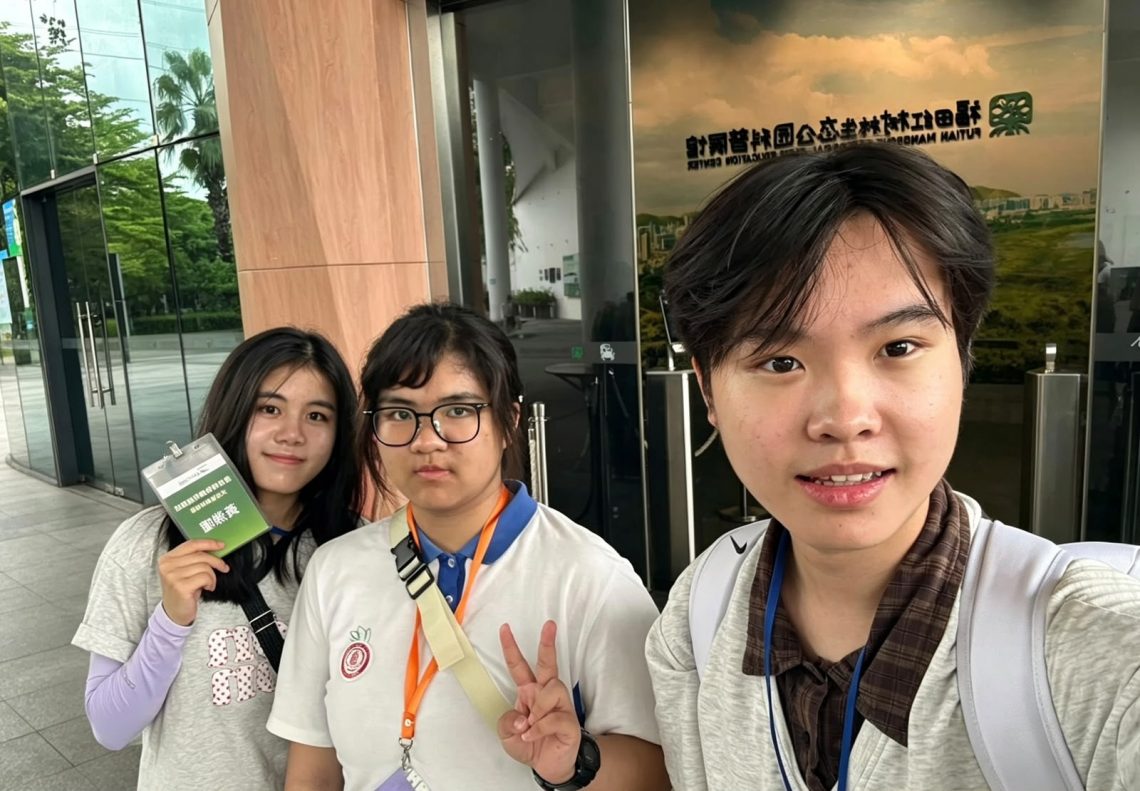

Written by Year 2 GRMG students Lorraine Wong Lok Tung and Ken Zhang Jun Hao, President and Vice President of the GRMG Society Gravel
How can nature and technology work together to create more resilient coastal cities?
During the GreenTech Youth Learning Lab GBA Trip 2026, GRMG students visited Shenzhen Futian Mangrove Ecological Park to investigate this question through wildlife observation, wetland monitoring and water quality testing. Reflections from Lorraine Wong and Ken Zhang, Year 2 GRMG students, highlight how the experience deepened their understanding of mangrove resilience, biodiversity-friendly design and technology-supported environmental protection.
Lorraine: “Observing wildlife adapt to urban innovations and mangroves survive extreme salinity revealed nature’s incredible resilience. Conducting hands-on water quality testing showed me that protecting these ecosystems requires both innovative habitat design and active environmental stewardship”.
Ken: “Through infrared monitoring tools and on-site water quality testing, I learned how technological innovation can enhance urban ecological protection. This trip made me realize that integrating smart, environmentally friendly technologies are crucial for building resilient and sustainable coastal wetland ecosystems”.
The sections below present Lorraine and Ken’s detailed observations and the field activities they undertook during the visit. Their reflections highlight how hands-on learning deepened their understanding of coastal ecology, technological innovation, and environmental stewardship.
Functions of biodiversity-friendly streetlamps
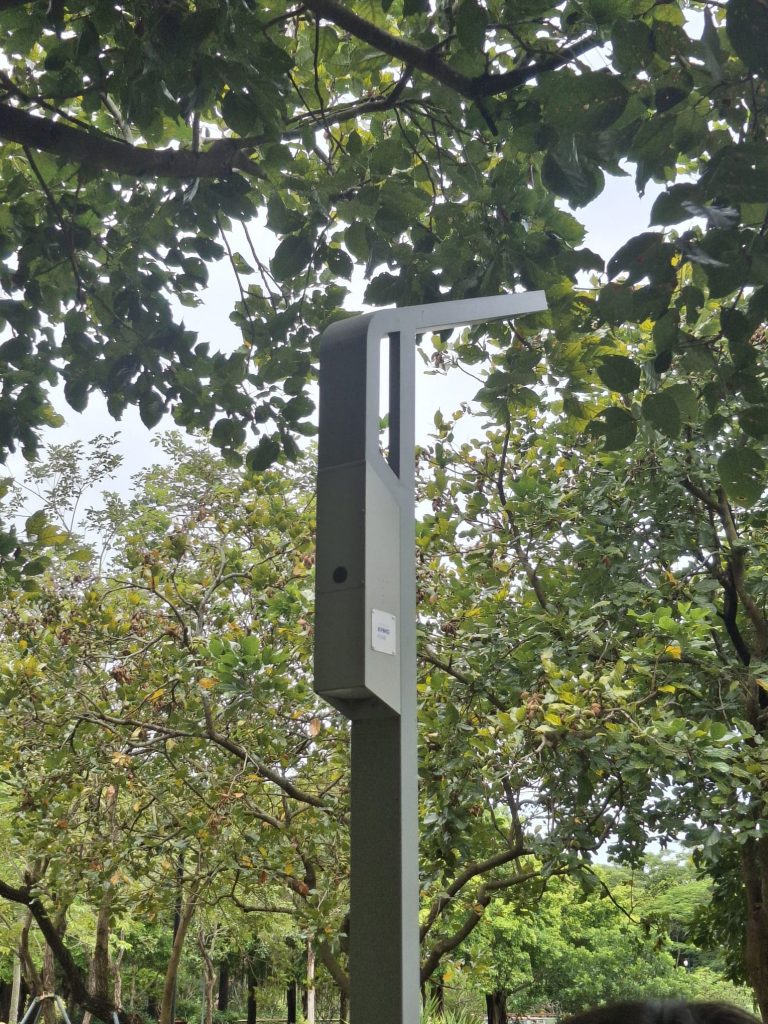
During our field study, we observed biodiversity-friendly streetlamps equipped with cameras, thermometers, warm lighting to minimize wildlife disturbance, and built-in nest boxes. To help species like the Great Tit (Parus cinereus) survive extreme weather—including typhoons—the setup provides managed water and food. Although the birds were initially hesitant, extreme weather reduced natural resources and shelter, prompting them to adapt and thrive in these artificial habitats.
Principle of mangrove salt adaptation
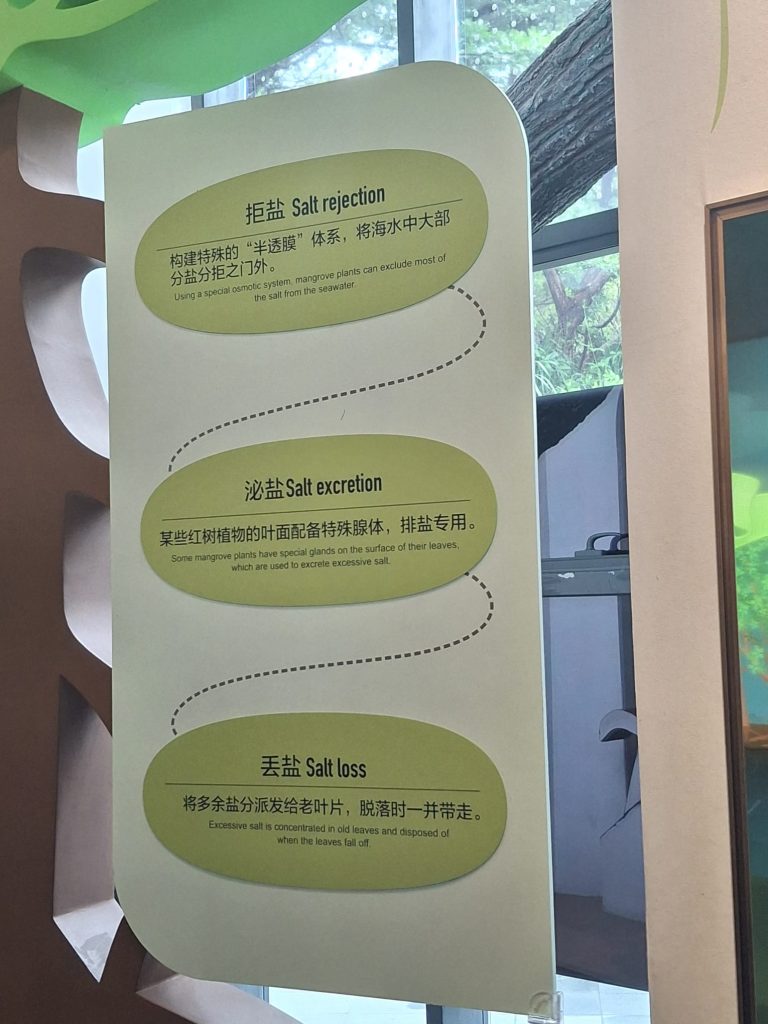
Exploring the park’s exhibition, we learned how mangroves survive in high-salinity intertidal zones, where salt concentrations can be 10 to 50 times higher than those tolerated by non-halophyte plants. Mangroves adapt through mechanisms like salt rejection, excretion, and leaf loss. Understanding these adaptations, I believe that protecting mangroves as natural coastal buffers is crucial to combating ocean salinity pressures driven by global warming and sea-level rise.
Field-based experiment
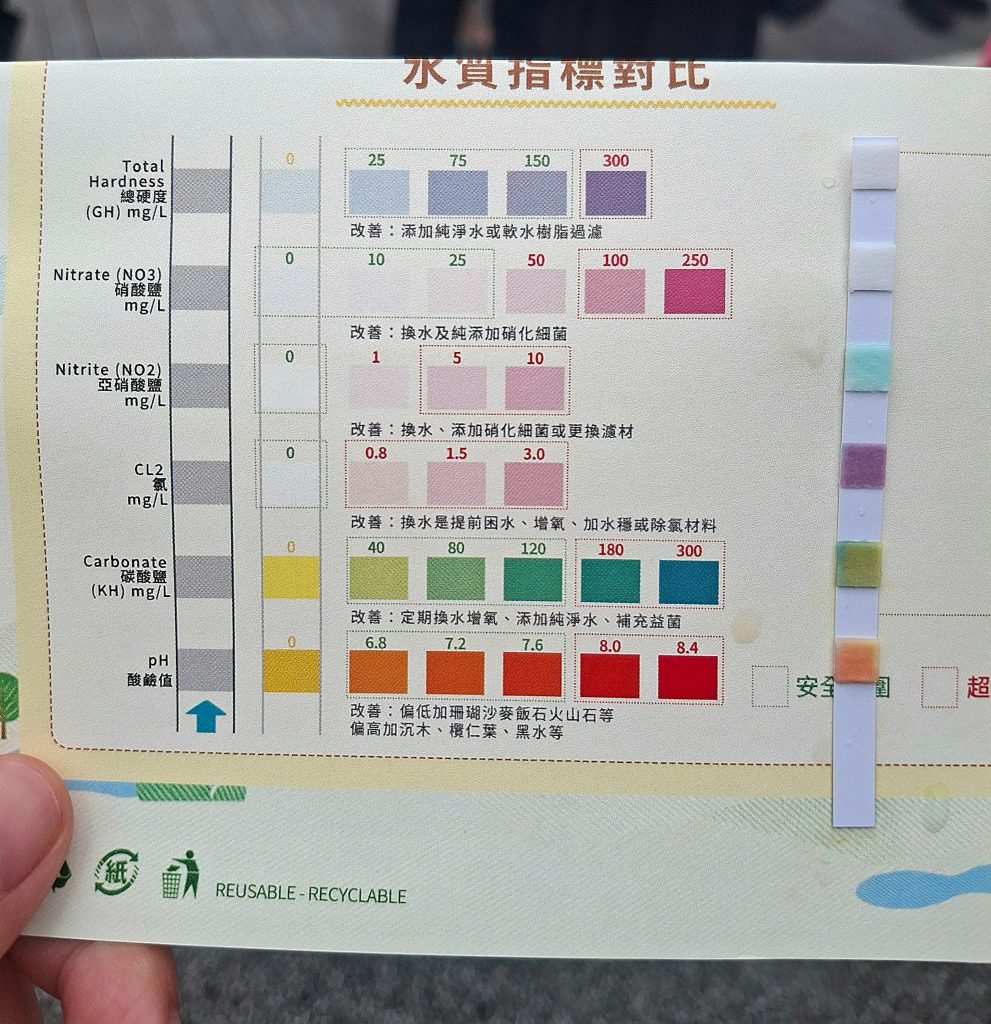
Beyond biological adaptations, we conducted hands-on water quality monitoring. Using basic and professional test strips, we measured pH, Total Hardness (GH), Carbonate Hardness (KH), Nitrate (NO₃), Nitrite (NO₂), and Chlorine (Cl₂). The results showed a balanced pH (7.2–7.6) and safe chemical levels, confirming a healthy aquatic environment that supports diverse organisms and validates the park’s effective wetland management.
The bird-friendly glass design of Futian Mangrove Park
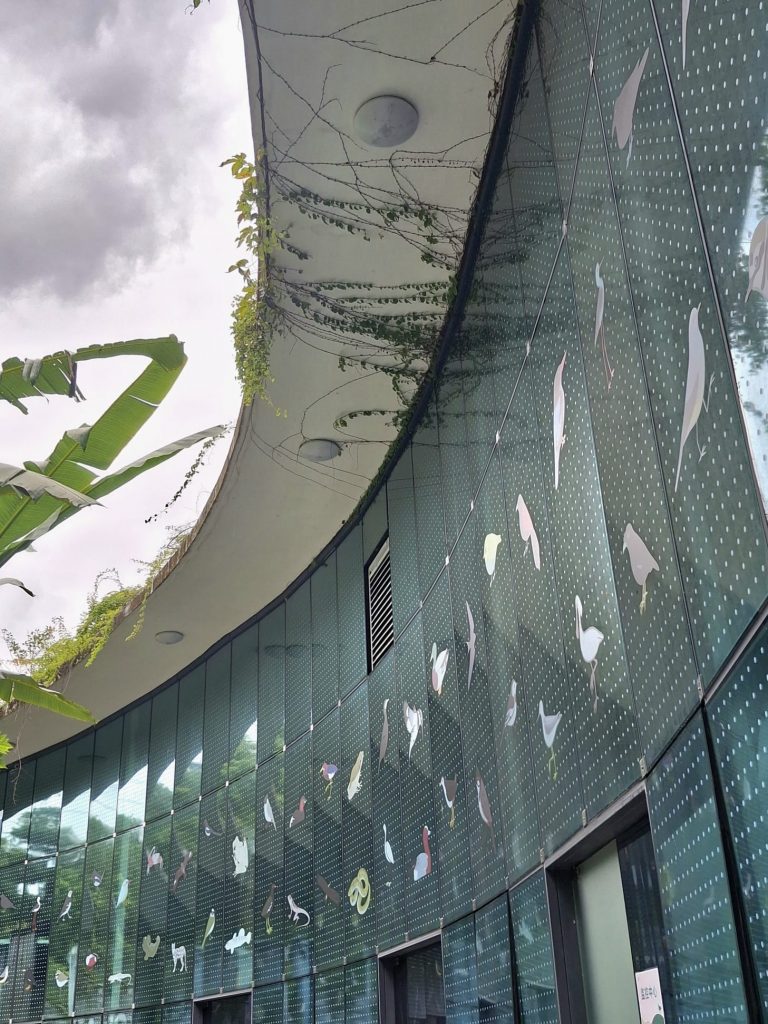
Futian Mangrove Wetland sits on the East Asian-Australasian Flyway, hosting large numbers of migratory and resident birds year-round. Evenly spaced white dot stickers on building glass disrupt surface reflections, stopping birds from mistaking reflected trees and sky for open space. Bird-shaped stickers added later further reduced fatal window strikes — a low-cost, high-impact solution grounded in avian behavior science.
The historical changes of Shenzhen Bay
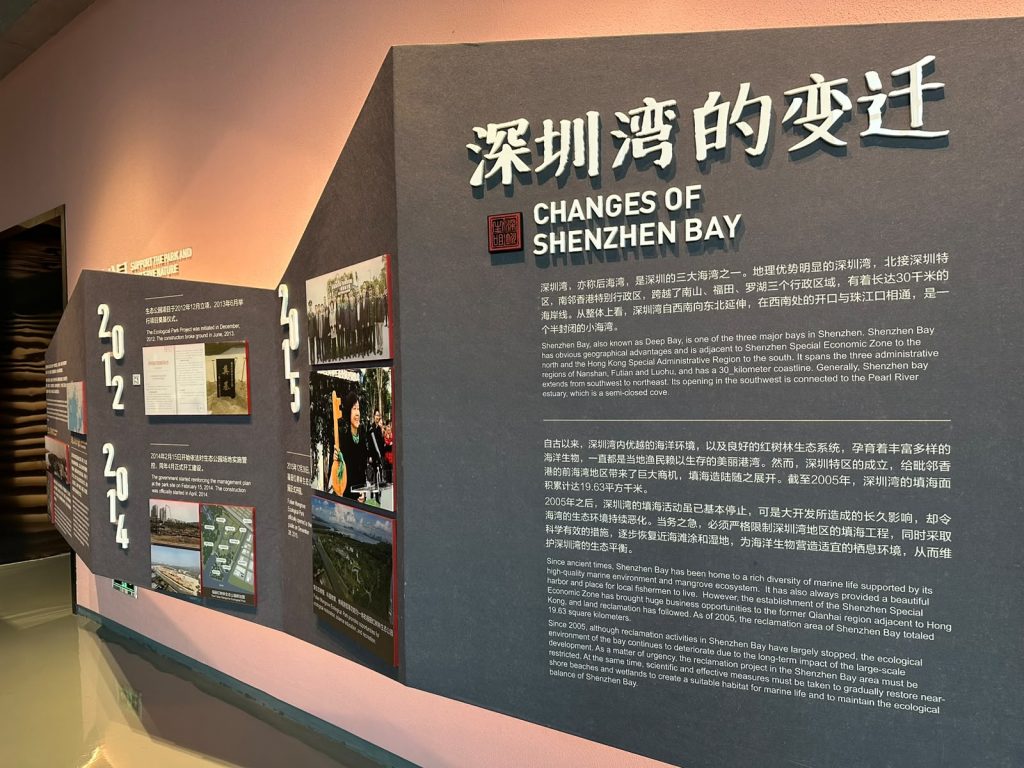
Once a 30km natural bay supporting mangroves and local fisheries, Shenzhen Bay suffered severe habitat loss from 19.63 km² of land reclamation by 2005. Since reclamation was halted, systematic tidal flat and mangrove restoration has turned it into a landmark urban reserve, reflecting China’s shift to balanced, sustainable development.
Conclusion
This field trip offered a vivid, hands-on lesson in urban ecological sustainability. From small, clever infrastructure designs like bird-friendly glass and biodiversity-friendly streetlamps to Shenzhen Bay’s decades-long ecological transformation, effective conservation relies on both thoughtful design details and long-term environmental policy. As geography students, we gained a deeper understanding that sustainable coastal development means building cities that coexist with nature, rather than against it.
